Opium’s trade legacy in the Golden Triangle is closely linked to Khun Sa. In this post, I share my experience visiting Khun Sa’s Old Camp and Thoed Thai in Mae Fa Luang, along with things to do in this remote region of Chiang Rai. Truly, the region was a major center of political unrest and drug trafficking in the late 20th century.
After exploring Chiang Rai Province, I ventured into the remote Thoet Thai Village in Mae Fah Luang District to discover the historical significance. As I learned more, I was reminded of the fading hill tribe cultures of Chiang Rai, which are at risk of disappearing due to globalization and the lack of promotion of the languages.

Thoed Thai, a Remote Village in Chiang Rai
Hin Taek, now officially called Ban Therd Thai, is a village in Chiang Rai, Northern Thailand, primarily home to the Akha people. Despite its official renaming, locals still refer to it as Ban Hin Taek.
Thoed Thai has a fascinating yet turbulent past, once serving as a stronghold for the infamous drug lord Khun Sa. Today, it stands as a reminder of the region’s complex history, blending cultural heritage with its storied past in the Golden Triangle.
Who was Khun Sa? The Infamous Opium King
Early Life and Rise to Power
Born Chang Chi-fu in 1934, Khun Sa was a notorious drug lord from Burma (Myanmar). His father was Chinese, and his mother was Shan. Also, he grew up in the Shan State, which later became the epicenter of the Golden Triangle—one of the world’s largest opium-producing areas.
In his twenties, Khun Sa formed his own militia. Fluent in Shan, Burmese, and some Chinese, he easily navigated the complex ethnic and political landscape of the region.

Golden Triangle Drug Empire
By the 1960s, Khun Sa founded the Shan United Army (SUA) and controlled a significant portion of the Golden Triangle’s drug trade. At his peak, Khun Sa was dubbed the “Opium King” and coordinated the global heroin distribution, including to the U.S. His empire rivaled that of infamous drug lords like Pablo Escobar and Frank Lucas.

Political Ambitions
Claiming to fight for the independence of the Shan State, he styled himself as a nationalist. Additionally, the wealth from his drug trade funded his resistance against the Burmese government. On the other hand, many saw his struggle as a cover for consolidating power and maintaining his drug empire. Both the Burmese government and international intelligence agencies considered him a criminal.

What Happened to Khun Sa?
After years of evading authorities, the Opium Warlord surrendered to the Burmese government in 1996. Instead of facing extradition to the United States, he was allowed to retire in Yangon, protected by the government. Eventually, The Drug Lord died in 2007 due to natural causes related to diabetes and high blood pressure.
To this day, his legacy remains controversial—on one hand, some view him as a ruthless drug lord, while on the other hand, others regard him as a political figure advocating for the Shan people.
Operations in Mae Fah Luang
MTA (Mong Tai Army) established a stronghold in Mae Fah Luang, a mountainous area near the Thai-Myanmar border. This camp was crucial to its heroin operations during the 1970s and 1980s.
Because of the region’s rugged terrain, Khun Sa maintained control over his empire and foster ties with local ethnic guerrillas. As a result, he became a target for law enforcement, including the U.S. DEA.
1982 Bombing by the Thai Army
Thai Army Bombing
In 1982, under pressure from the U.S., the Thai Army launched airstrikes on Khun Sa’s Camp in Mae Fah Luang. Consequently, forcing him to retreat into Myanmar. Despite this setback, Khun Sa’s empire continued to thrive in Shan State (Burma) until his surrender in 1996.

Remnants of the Old Camp
Though Khun Sa was expelled from Mae Fah Luang, his operations persisted in Myanmar. His drug trade flourished until his surrender. However, today, the remnants of his old camp in Mae Fah Luang serve as a historical site, attracting visitors interested in the Golden Triangle’s drug history and Thailand’s battle against it.
Visiting the Old Camp Today

Exploring Khun Sa’s Museum
After riding the motorbike through remote villages from Chiang Rai, I eventually arrived at Ban Thoet Thai. Khun Sa’s former headquarters remain historically significant, despite lacking extensive development.
Luckily, I met an elderly Thai Yai woman who became my unofficial guide at the Khun Sa headquarters, adding to the site’s rustic and historically rich atmosphere. When I asked if she had ever spoken to him, she simply replied, «I just saw him, but never talked to him».
The Headquarters: A Glimpse into the Past
Mainly, the museum’s information is provided in Thai and Shan, with a few English translations. I explored several rooms that remain significant.
- The Parlour Room: A statue of Khun Sa dominates this room, accompanied by dramatic artwork highlighting his power and legacy.
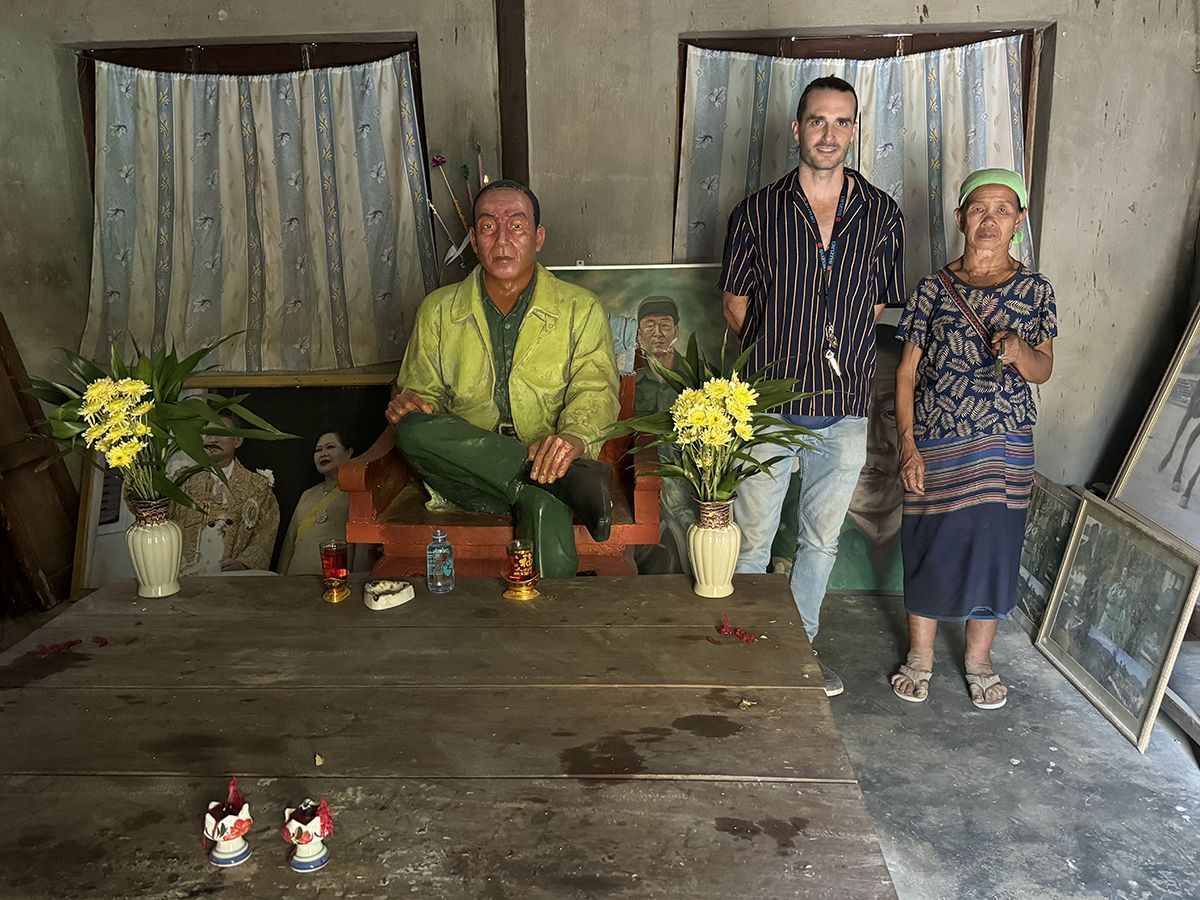
- Khun Sa’s Bedroom: Surprisingly modest, the bedroom resembled a monk’s retreat rather than a warlord’s extravagant lair. The training soldier’s house is now in disrepair but still holds historical importance.

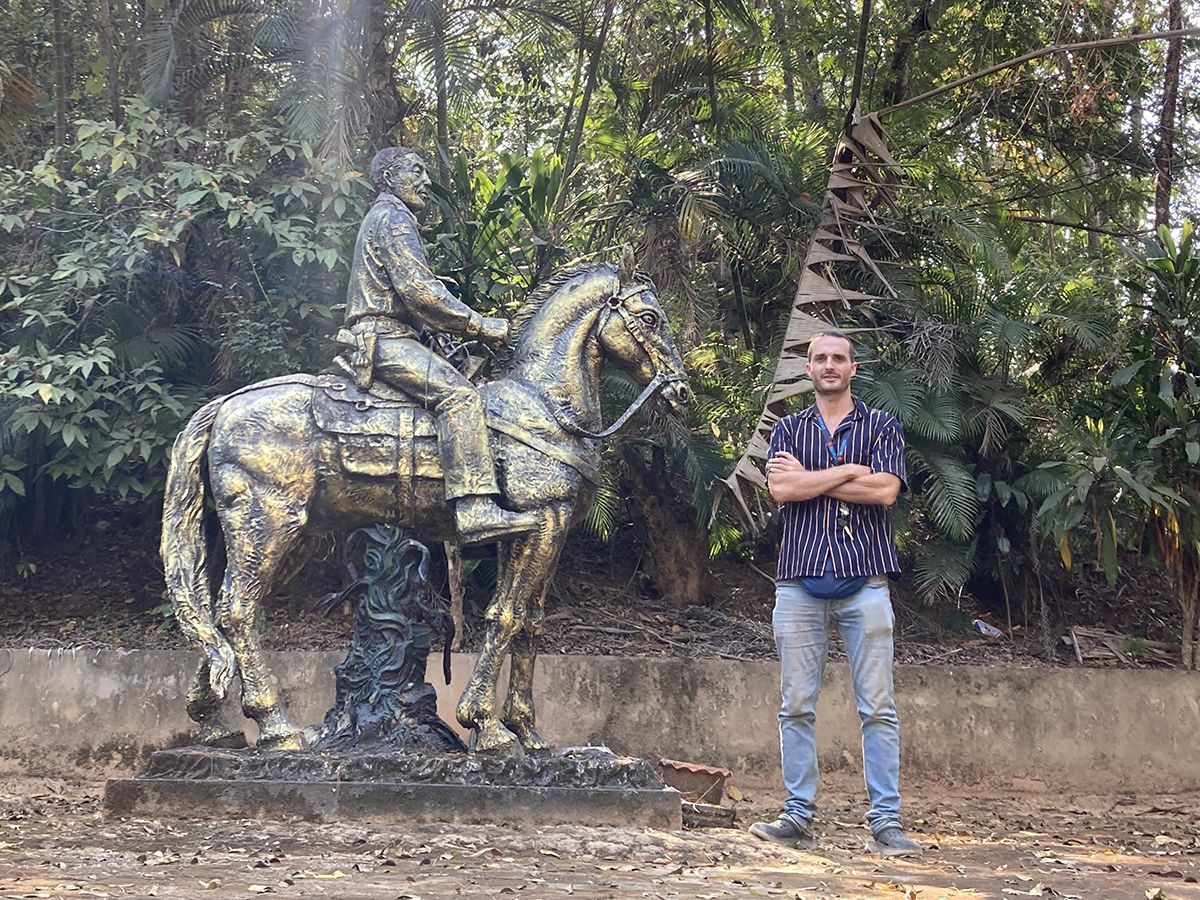
The Statue of Khun Sa on Horseback
One of the camp’s highlights is the statue of Khun Sa on horseback. He was often depicted in historical accounts and photographs as riding a horse, which was common for leaders or military figures in remote areas. Frequently, a horse symbolized his status and leadership, while also being well-suited to the rugged terrain of the region.
Tourist-Free, for Now
During my visit, the museum was relatively quiet, with only two Japanese travelers. Consequently, this location is off the beaten path, making it an ideal spot for history enthusiasts and those interested in exploring warlord hideouts
What to Do in Thoet Thai, Mae Fah Luang
1. Wat Phrathat Kha Kham
Near Khun Sa’s Old Camp, Wat Phrathat Kha Kham offers a peaceful Buddhist retreat. Monks and chickens wander freely, and the view of Ban Thoet Thai is stunning. It’s a perfect place for quiet reflection.
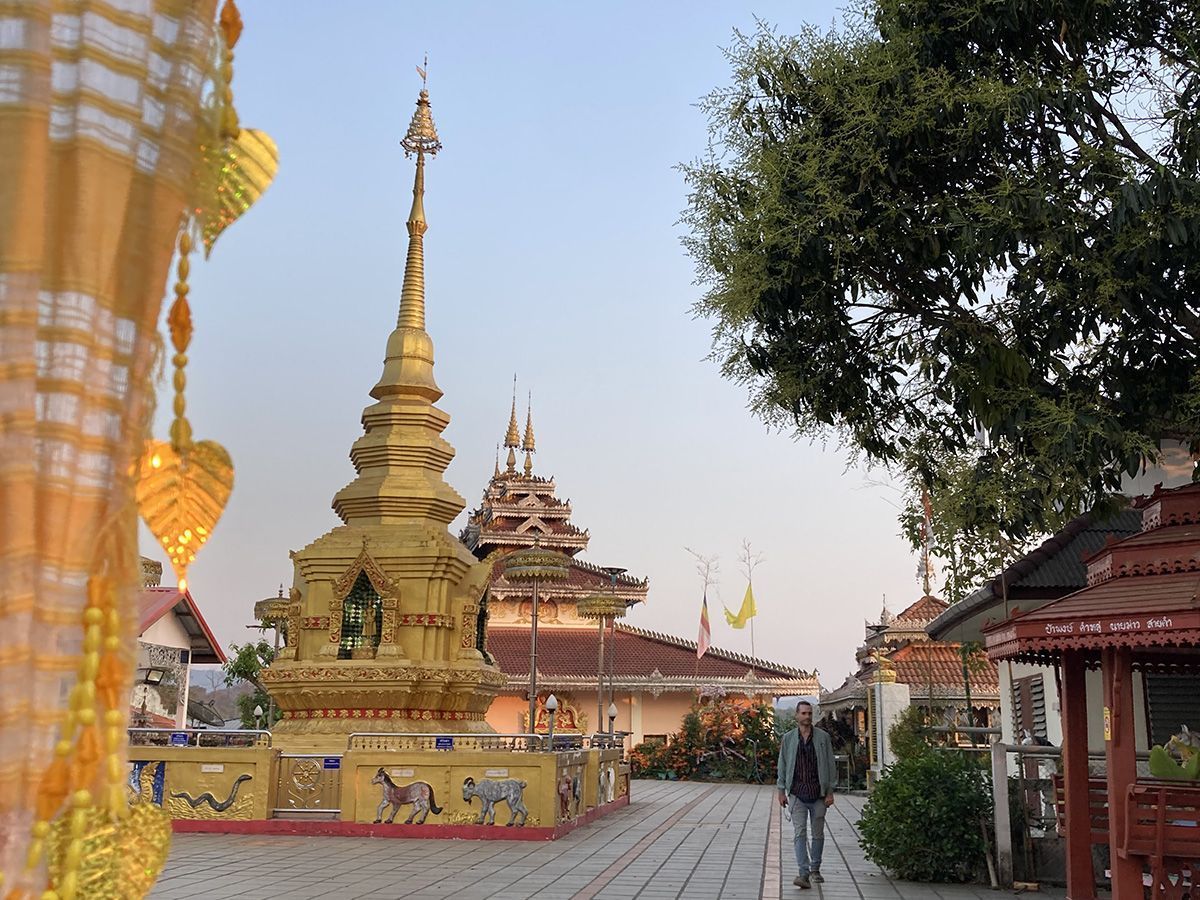
2. Phra Khuva Boonchum Tribute and Pagoda
Located near Khun Sa Old Camp, this pagoda offers great sunset views. Revered for his meditation practices, Thai-Burmese monk Khuva Boonchum left a lasting impact, particularly during the 2018 Tham Luang cave rescue.

On the left side of the image, you can see the Temple of the Giant Bronze Buddha, and on the right side, Wat Phrathat Kha Kham. (Picture taken from the Phra Khuva Boonchum Tribute, right before sunset)
3. Thoet Thai Market
The morning market is a vibrant spot to experience local life. It runs from 6:30 to 9:00 am, offering fresh fruits, vegetables, and authentic local foods at affordable prices.
As is common in many morning markets in Northern Thailand, Laos, India, and other countries, similarly, this market is no exception.So, It is a place where people from different ethnicities gather to sell their products.

4. Temple of the Giant Bronze Buddha (Wat Phra Songchai Ratanapalangphuang)
A short ride from Thoet Thai Village, this peaceful mountain temple houses a giant bronze Buddha. I found some Buddhist monks living there. It is a quiet place with amazing views.

What to See in Thoed Thai Village: My Experiences
Traditional Spinning Tops in Northern Thailand: A Timeless Game
In the remote villages of Mae Fah Luang, traditional games continue to bring the community together. One such game is the spinning top, or «ลูกข่างหมุน» in Thai. Neighbours often gather in the afternoons to compete in this age-old activity. Players spin wooden tops by winding them with string and releasing them onto the ground to see how long they can spin.
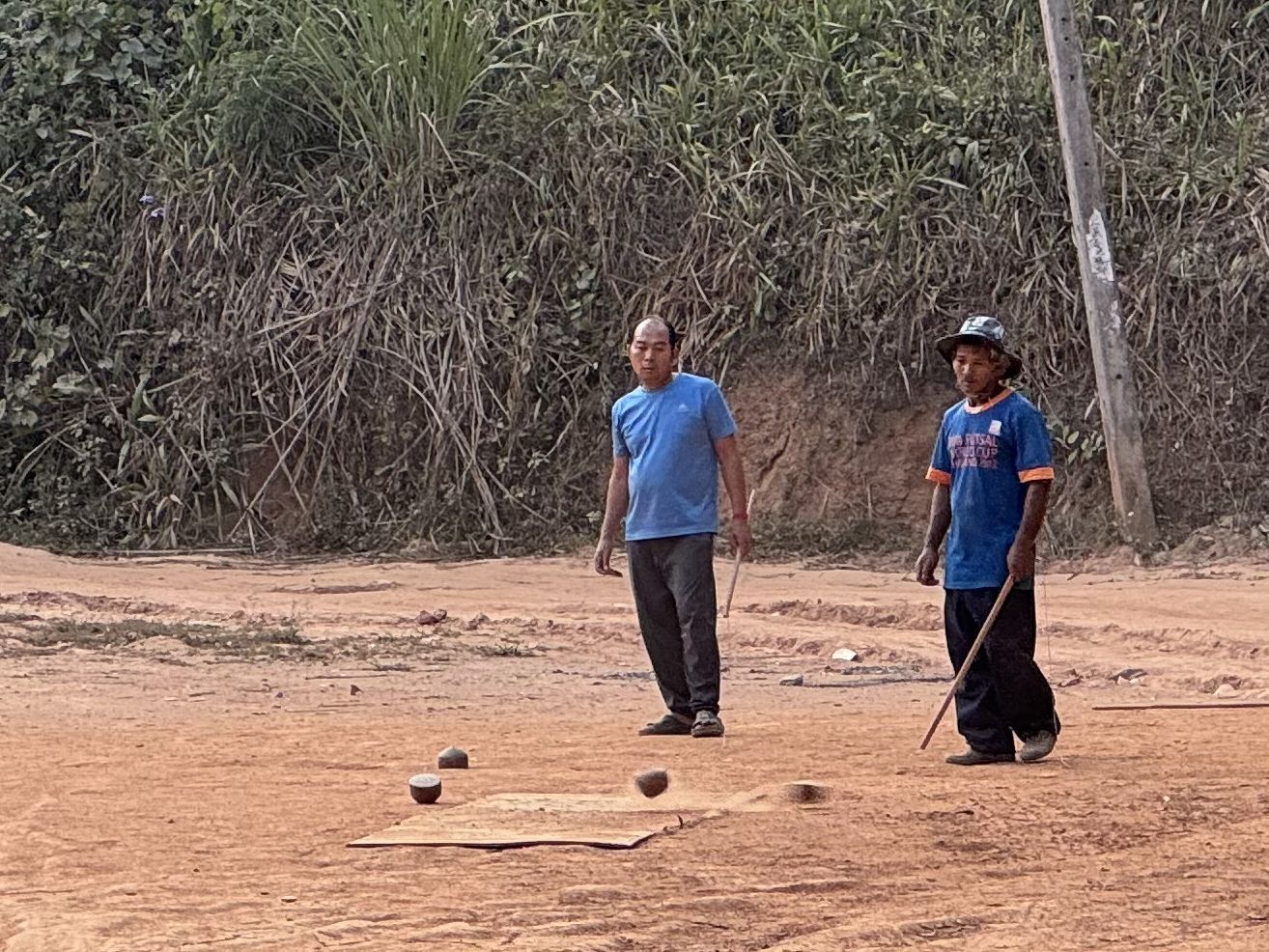
This simple yet engaging game not only showcases skills passed down through generations but also fosters a sense of connection among locals. Moreover, It’s a beautiful reminder of Thailand’s rich cultural heritage and the joy found in simple traditions.
The Siamese Buffalo: A Symbol of Thailand’s Countryside
The Siamese buffalo, also known as the Krabue buffalo or Thai water buffalo, is a cornerstone of rural life. Farmers have traditionally used these majestic creatures in rice farming for tasks like plowing fields and pulling carts. They are still commonly found in Chiang Rai, Chiang Mai, and the Isaan region.
With their long, curved horns and calm demeanor, Siamese buffaloes are well suited for working in the rice paddies of Thailand’s countryside. However, their numbers have declined in recent years due to modern farming equipment replacing traditional farming methods.
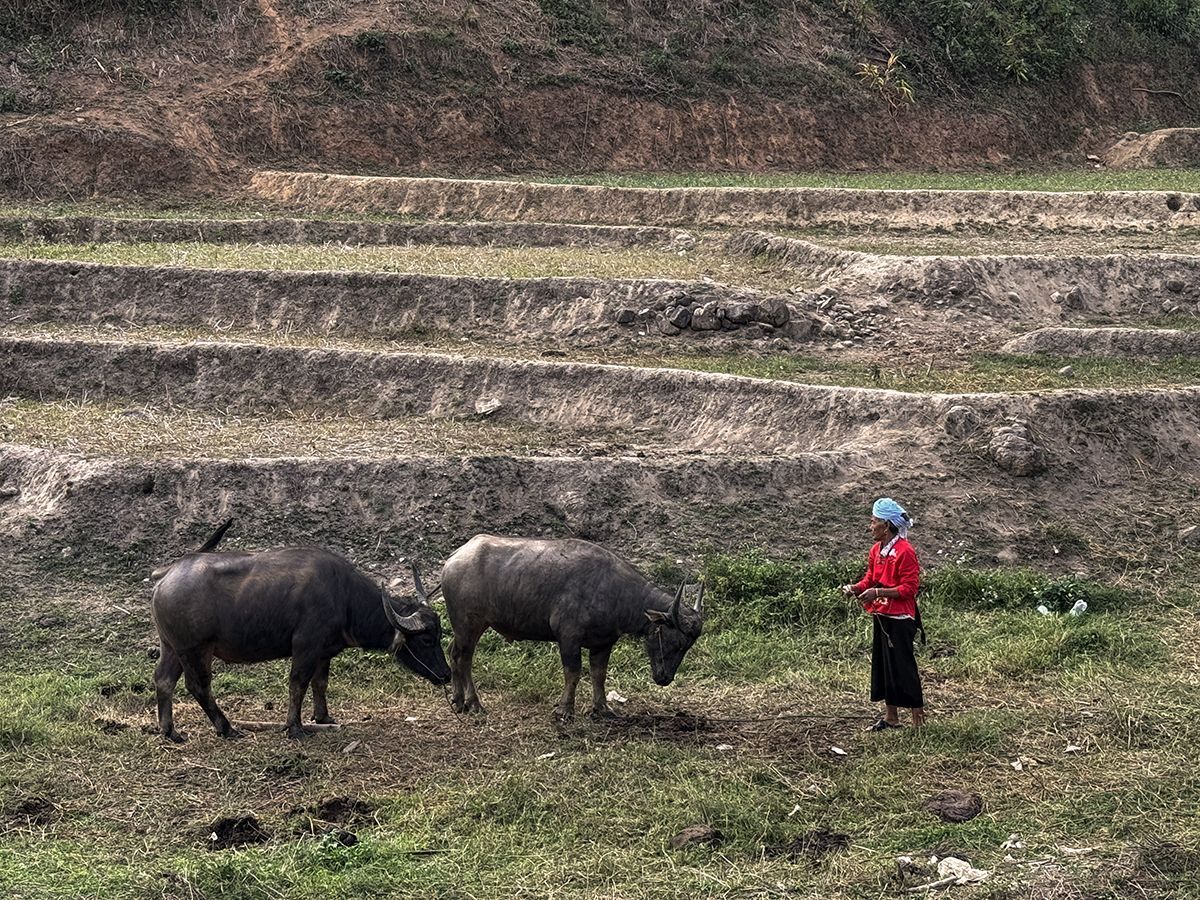
In remote areas of Thailand, you can still see women and men tending to their buffaloes in the fields, as they’ve done for generations. One such example is in Mae Fah Luang, where a woman lovingly cares for her two buffaloes, a sight that speaks to the deep connection between the Thai people and their land. Moreover, this tradition remains a vital part of rural life for many.
Broom Grass in Thailand: The Traditional Craft Process
Broom grass in Thailand is a natural material used for crafting traditional Thai brooms. The process begins with harvesting the grass from wild fields in rural areas. After gathering, the broom grass is thoroughly cleaned and sorted to ensure the best quality.
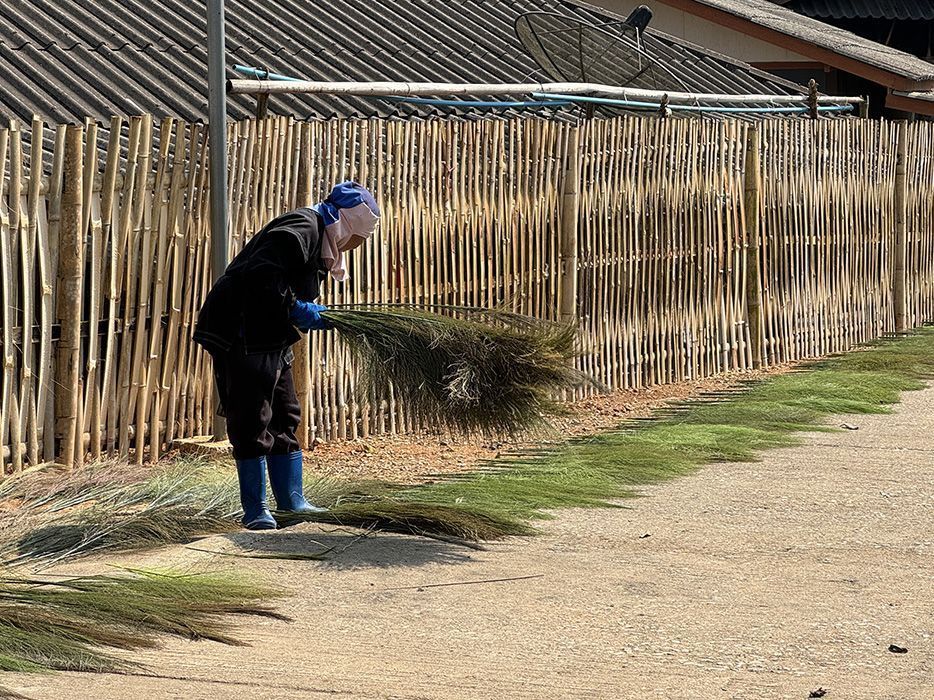
Skilled artisans then craft handmade brooms by bundling the grass together and attaching it to bamboo broom handles or rattan handles. So, the brooms are carefully shaped, trimmed, and finished with a detailed touch.
Additionally, this traditional process is still practiced in many villages, keeping the ancient craft alive. As a result, these eco-friendly Thai brooms are used for sweeping homes and temples and are often sold in local markets, offering a sustainable alternative to plastic brooms.
In other countries, similar traditional broom-making processes can be found. For example, in Laos, India, Vietnam, artisans also use local grasses and plants to create brooms by hand. These brooms serve the same functional purpose but are made with the unique materials and techniques of each region.
Where to Eat in Thoet Thai Village
Badonso Cafe
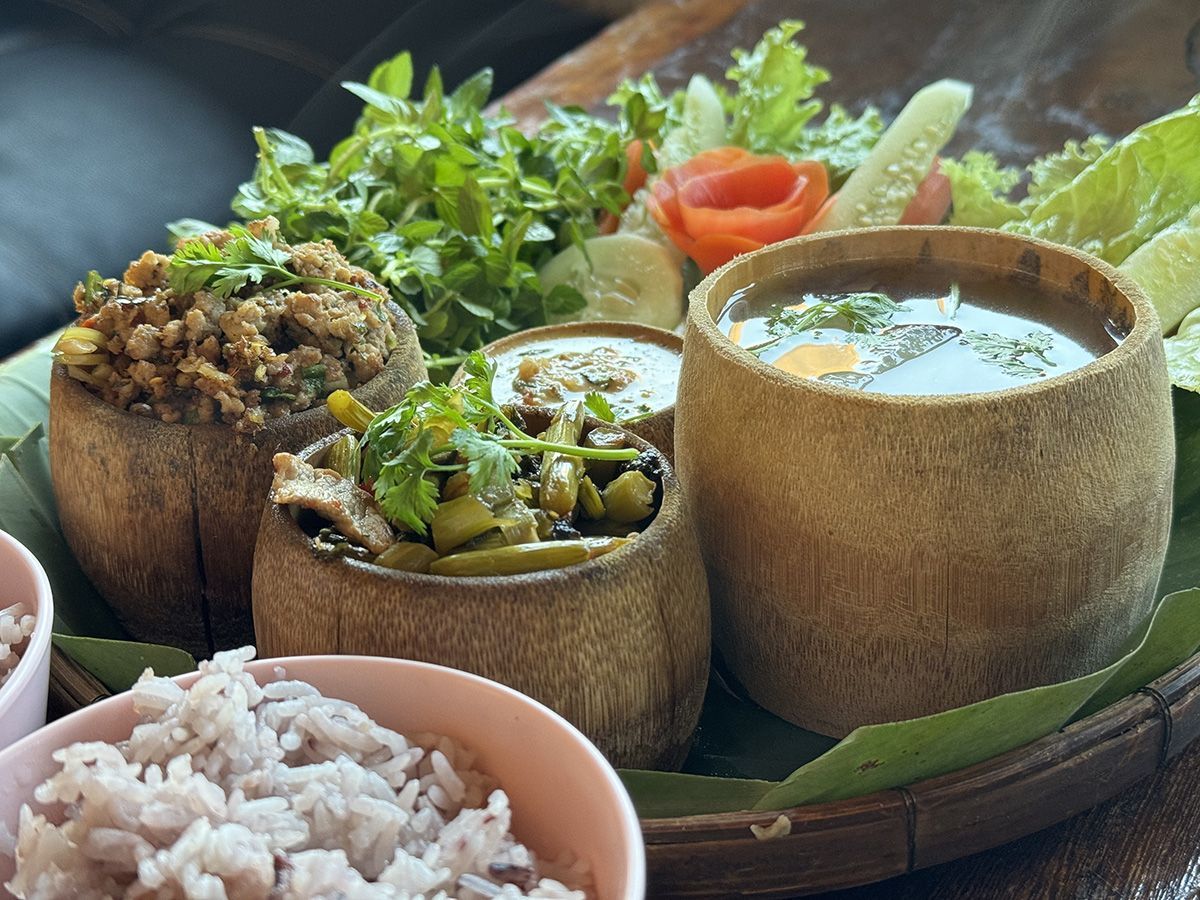
Badonso Cafe is a great place to enjoy an authentic northern Thai meal. The Restaurant offers an incredible view and a chance to try local Akha coffee and food. Above all, It’s a cozy spot to relax and take in the surroundings.
ต้นมะขามหมูกระทะ Restaurant
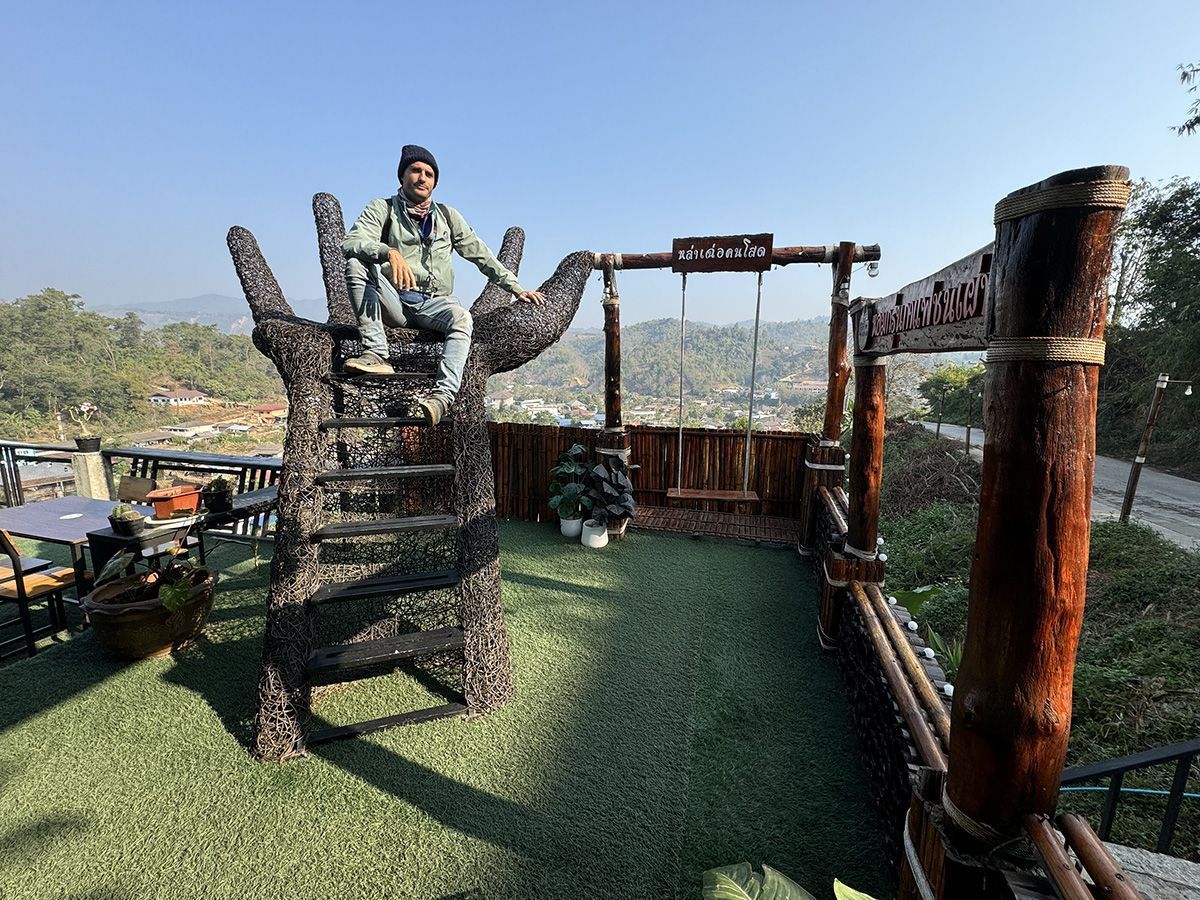
This BBQ buffet restaurant is a local favorite. It offers an all-you-can-grill experience with delicious marinated meats and seafood. Moreover, It’s an affordable and fun option for a casual meal. If I am not mistaken, the cost was around 200 Thai Baht per person.

Accommodation in Thoet Thai Village
Thoet Thai offers simple yet comfortable accommodation options. I stayed at Kredphet Guesthouse Hotel, which provided excellent value. Alternatively, the peaceful หลับในดอย Homestay (Lap Nai Doi) offers a relaxing atmosphere and a delicious local breakfast.
Important: In fact, Hotels in Thoet Thai Village are not listed on any booking platforms, so the only way to reserve a room is to contact them directly via telephone or Line. But no worries—since this remote part of Thailand is off the tourist trail, you’ll probably find a room just by showing up, as I did.
How to Get to Thoet Thai Village
By Car or Motorbike
From Chiang Rai, head north on Highway 1. Turn left onto Highway 1130 toward Mae Salong and follow the winding roads to Thoet Thai Village.
Public Transportation
Take a bus or minivan from Chiang Rai Bus Terminal 1 to Mae Chan, then a local songthaew or motorbike taxi to Thoet Thai Village.
The following documentary explains the various issues quite well and provides a great overview of the Golden Triangle’s past.
Khun Sa’s FAQS
Is Khun Sa Old Camp Worth Visiting?
Absolutely, it’s worth visiting! It’s especially great for those interested in the history of the Golden Triangle and its ties to the opium trade. Khun Sa Old Camp, once the stronghold of the infamous drug lord Khun Sa, sits in a remote area near the Myanmar border.
Getting there involves a scenic drive through winding mountain roads, passing traditional Shan and Akha villages. Along the way, you’ll enjoy stunning panoramic views of northern Thailand’s highlands
What was the connection between Khun Sa and Frank Lucas?
Frank Lucas sourced heroin from the Golden Triangle, where Khun Sa controlled much of the drug trade, flooding the U.S. market with his «Blue Magic.»
Who was Khun Sa’s family?
Khun Sa had eight children, who were educated abroad and later involved in various businesses in Myanmar. Actually, some of his children have continued his legacy.
How much fortune did Khun Sa accumulate?
Khun Sa’s drug empire made him immensely wealthy. His operations produced hundreds of tons of opium, and his wealth lasted long after his retirement.
What films feature Khun Sa or reference him?
Khun Sa has been mentioned in American Gangster (2007), The Cook Report (1990), and Black Lagoon (Manga/Anime), reflecting his role in the Golden Triangle’s drug trade.
What was Khun Sa’s army?
The Mong Tai Army (MTA), led by Khun Sa, played a key role in opium production and distribution. At its peak, his army had thousands of soldiers under his command.
FAQS about the Golden Triangle
Why is Thailand called the Golden Triangle?
Thailand is called the Golden Triangle because it’s located where Thailand, Laos, and Myanmar meet. The area was historically known for opium production, but today it’s also recognized for its cultural richness and natural beauty.
What is the problem in the Golden Triangle?
The Golden Triangle has faced issues like drug trafficking and poverty due to its past involvement in the opium trade. Environmental concerns and the impact of tourism are also challenges in the region, although things have improved in recent years.
Is Golden Triangle, Thailand worth visiting?
Yes! After traveling extensively around Chiang Rai, the Golden Triangle is one of my favorite regions in Thailand. It’s rich in culture, history, and stunning natural beauty, with plenty of unique cultural experiences and scenic views.
Is Golden Triangle safe?
Yes, the Golden Triangle is generally safe for tourists. Furthermore, the area has seen improvements in safety and infrastructure, though, like anywhere, it’s important to exercise standard caution.
What can I do in the Golden Triangle?
In the Golden Triangle, you can explore Golden Triangle Park, visit the Hall of Opium Museum, take a boat ride on the Mekong River, and enjoy views of Thailand, Laos, and Myanmar. You can also learn about the region’s history and culture.
Exploring the House of Opium Museum in Chiang Saen: A Deep Dive into History and the Opium Trade
During my travels in Northern Thailand, I had the chance to visit the House of Opium Museum in Chiang Saen, an eye-opening museum that offers a deep dive into the history of the opium trade in the Golden Triangle. This immersive experience goes beyond just showcasing artifacts—it tells the story of how opium shaped economies, fueled conflicts, and impacted societies across Southeast Asia.
Located near the Mekong River, this museum presents a detailed account of Thailand’s war on drugs, the devastating effects of addiction, and the efforts to combat the opium trade. Walking through its interactive exhibits, I gained a better understanding of the Golden Triangle’s opium history, from its colonial roots to its modern-day impact.
Is the Hall of Opium worth visiting?
Absolutely! If you’re interested in history, culture, or learning about the impact of the opium trade in Southeast Asia, this museum is a must-visit. The well-designed exhibits and engaging storytelling make it a powerful and educational experience.
If you’re traveling in Chiang Rai province and want to learn about the region’s complex past, the Hall of Opium is well worth your time. It’s not just a museum—it’s a fascinating way to understand how history, politics, and culture intertwine in the Golden Triangle drug trade.
Final Thoughts
Indeed, I encourage anyone interested in ‘hidden cultures‘ or history to fly to Chiang Rai, rent a motorbike or car, and travel to these remote places to learn about them, because soon all of this might vanish and become part of history.